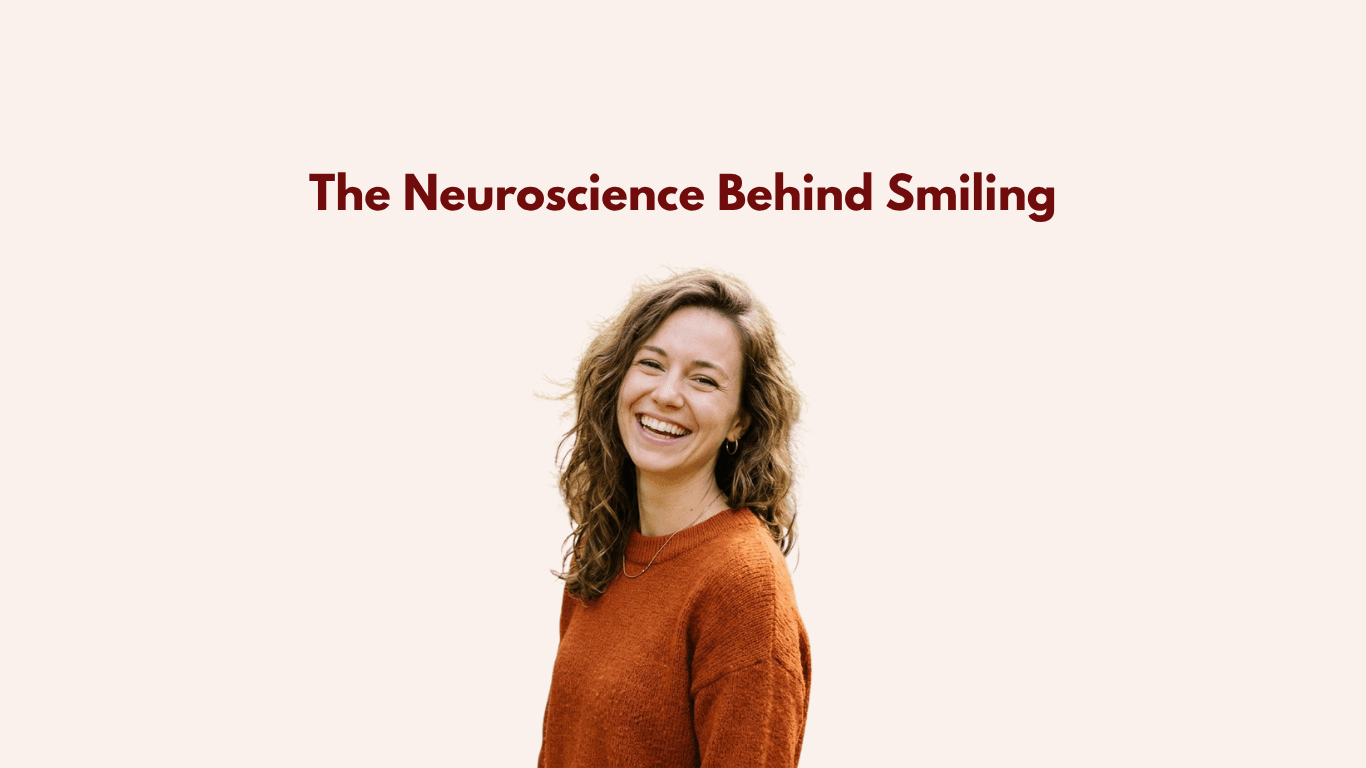
Has someone ever randomly smiled at you?
And how many times have you found yourself smiling back at them even though you weren’t happy?
Neuroscientists discovered Mirror neurons (opens in a new tab) in the 1990s, which fire both when you perform an action and when you observe someone else doing it…Causing you to mimic that action. Smile mimicry is rooted in this exact system of our brain. Hence suggesting that smiles dont just express emotions, they spread them. But the Facial Feedback Hypothesis (opens in a new tab) poses that the reverse might be true as well, stating that facial expressions influence the emotional state. So even though you’re faking that smile, it is still sending signals to your brain, causing those “feel good” chemicals to do their job, meaning a smile expresses emotion, spreads that emotion and can also create emotion.
So have you noticed how there are different kinds of smiles; polite smiles, nervous smiles, embarrassed smiles, sad smiles, happy smiles… i could go on.
But what happens when someone stops smiling altogether? They cover their mouth when they laugh, conscious of chipped incisors, discolouration or missing teeth. They avoid smiling due to inflamed gums or maybe chronic bad breath makes them hesitant to even speak, unable to be a part of conversations they would otherwise enjoy, hesitant to join the tables they want to. This has a more profound effect than you can imagine, slowly changing how they interact with others and the way they see themselves.
So when a dentist restores your smile, they are treating one of the most important, simplest and contagious forms of human communication, not just your teeth.